Cricketainment and the One-Hour Game: Could T60 Be Cricket's Next Fast Lane?
Apr 25, 2026
PNN
New Delhi [India], April 25: Cricket, the Gentleman's Game, has increasingly moved beyond the boundaries of sport to become a full-fledged entertainment spectacle, a phenomenon many fans now casually describe as "cricketainment." Packed stadiums, prime-time television slots, and high-energy franchise leagues have transformed how the game is consumed. As audiences grow more accustomed to shorter, faster sporting content, the question naturally arises: could cricket become even more compressed without losing its appeal?
If history is any guide, the sport has rarely resisted reinvention. Over the past four decades, limited-overs cricket has undergone multiple structural changes, each aimed at making the game quicker and more engaging. The earliest One Day Internationals were played over 60 overs per side. By the late 1980s, the format was trimmed to 50 overs, while the early 2000s brought the biggest disruption with the arrival of Twenty20 cricket, a format that reduced the contest to just 20 overs per side and dramatically altered the sport's tempo. Matches now finish within three hours, encouraging aggressive batting, innovative shot-making, and rapid tactical decisions.
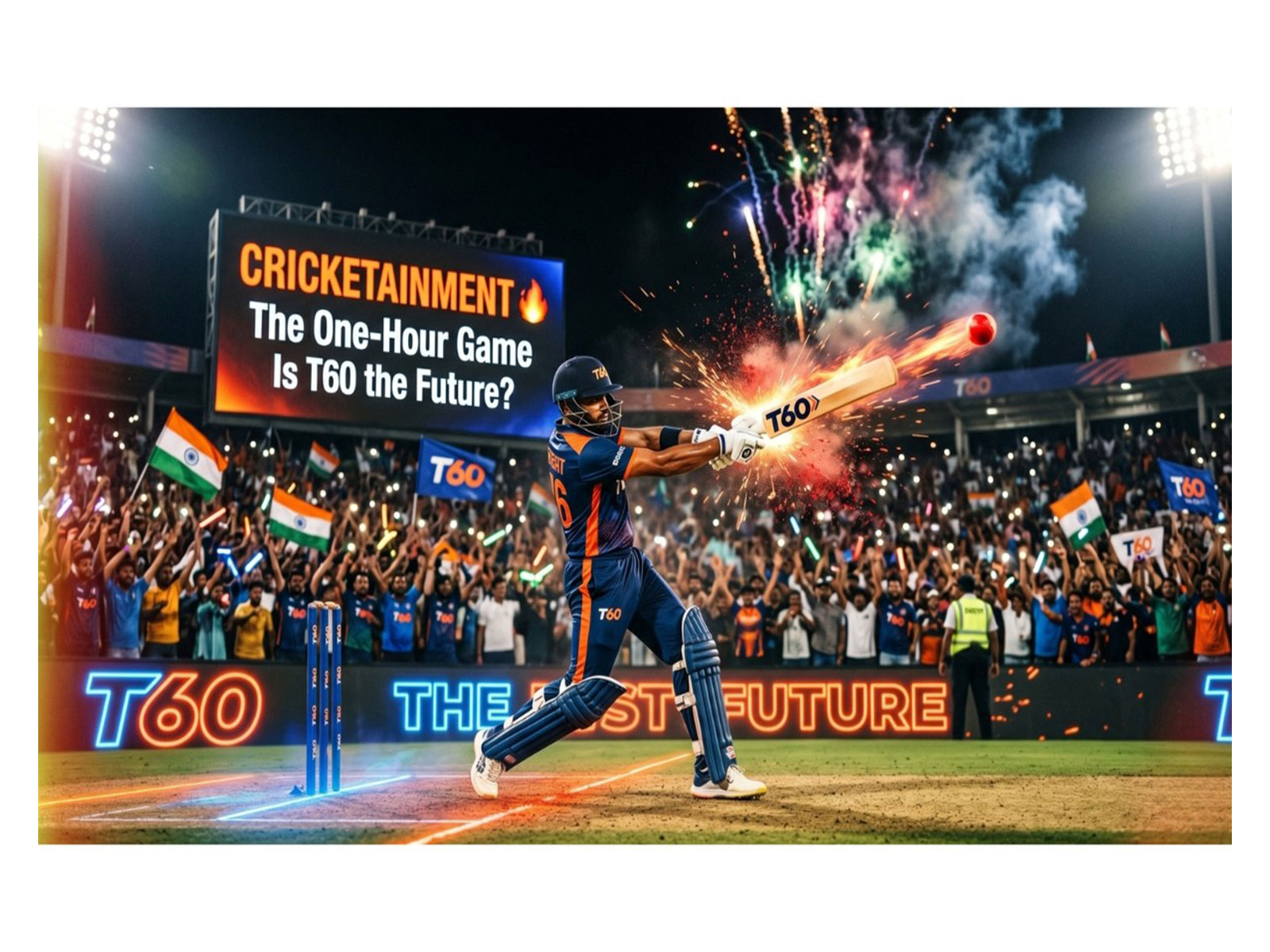
Yet the appetite for brevity in modern sport continues to grow. In an era dominated by quick digital consumption, the idea of an even shorter contest -- a hypothetical 60-ball format per side, effectively a 10-over match -- often surfaces in conversations about cricket's future. Such a format, loosely imagined as The Sixty (T60), would compress the game into roughly an hour, turning it into a rapid-fire sporting event where every delivery carries immediate consequence.
This assumes significance in the wake of the Abu Dhabi T10 Cricket League, recognized by the International Cricket Council (ICC). Similarly, The Hundred, being conceptualized and organized by the England Cricket Board, is also one of the examples of the 'new' shortest form of cricket is being talked about. Also, some ex-players like Eoin Morgan and Virender Sehwag have been batting for this shorter format.
If it becomes a reality, this format would not only integrate speed and time, but also bring elements of comfort, cheer, relaxation, and leisure, assuring holistic port happiness.
Former Indian captain Dilip Vengsarkar, who played during the transition from 60-over to 50-over one-day cricket, believes such a concept would fundamentally alter how the game is approached.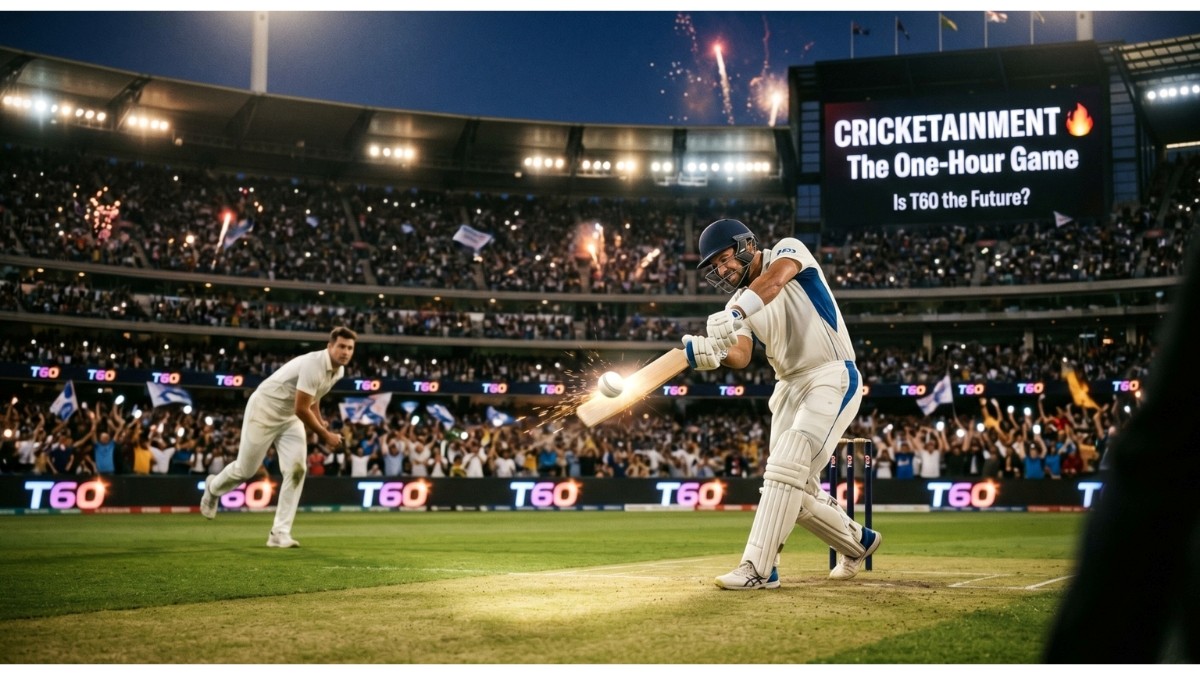
"Cricket has already accelerated massively over the years. If a match ever comes down to just a couple of balls, every delivery would feel decisive," he said. According to him, traditional pacing in batting would virtually disappear. "There would be no settling in.
Players would have to attack immediately, and the margin for error would be minimal," Vengsarkar adds.
Bowlers, he feels, would also operate under extreme pressure in such a condensed format. "One expensive over could swing the entire match. Imagine that short, momentum would shift in seconds."
Even such possibilities generate curiosity, experts emphasize that experimentation must coexist with tradition. Vengsarkar believes shorter formats can complement rather than replace the longer versions of the game. "Cricket's strength is its variety," he says, adding, "Innovation is welcome, but the longer formats must always remain the foundation."
For now, a T60 contest remains merely a thought experiment, an idea that reflects cricket's continuing search for balance between sport and spectacle. Yet the sport's history suggests that whenever audiences embrace speed and excitement, cricket has rarely been reluctant to evolve.
If the concept of a one-hour match ever finds its way from conversation to competition, it could represent the purest expression yet of cricketainment, a format where the drama unfolds at breakneck speed and every ball truly matters.
By Bhalchandra Chorghade
(ADVERTORIAL DISCLAIMER: The above press release has been provided by PNN. ANI will not be responsible in any way for the content of the same.)