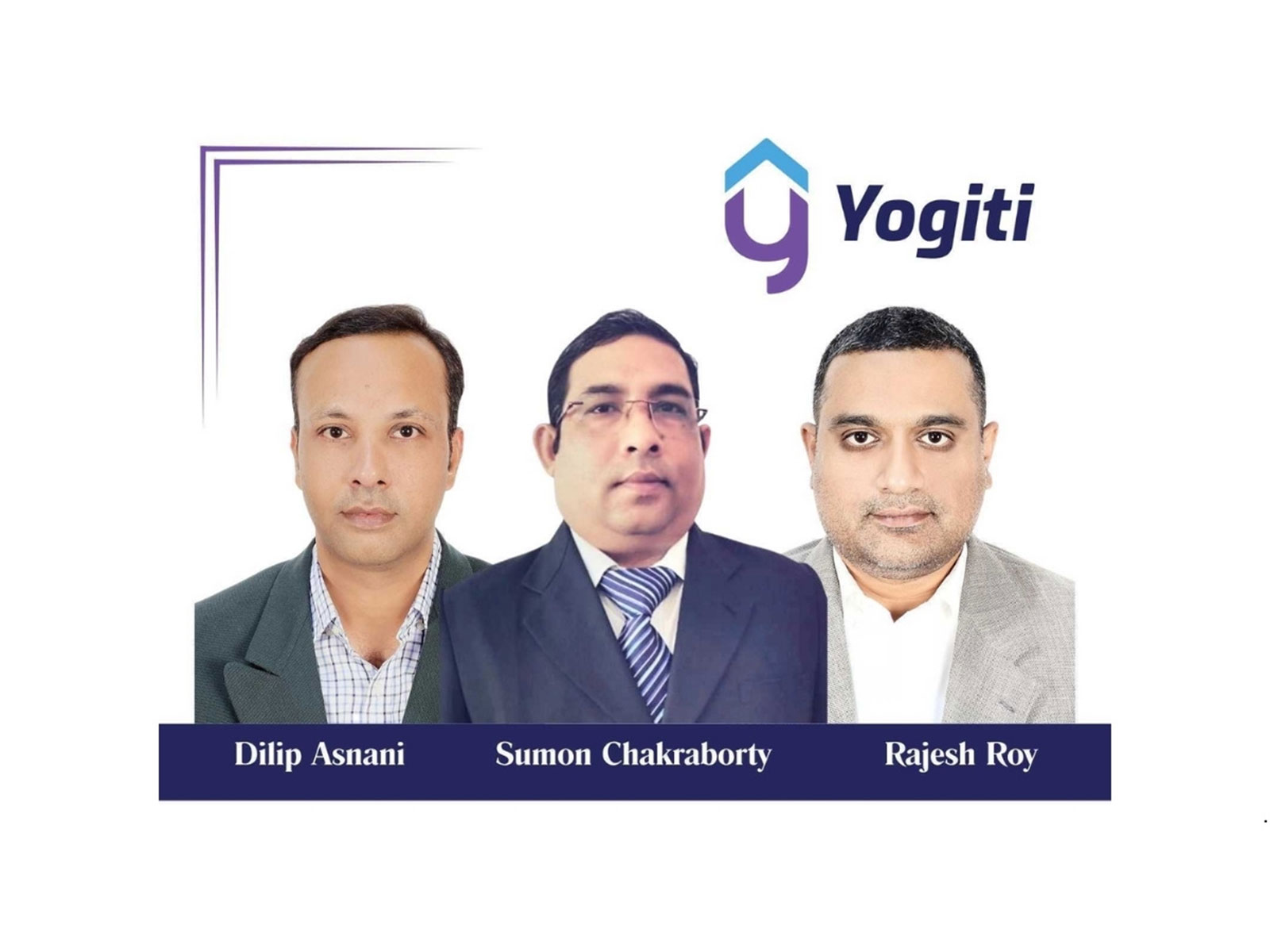
From Traditional QA to AI-Led Quality Engineering: The Yogiti Story
Sep 14, 2026
PNN
New Delhi [India], September 14: Every enterprise now wants AI in its delivery pipeline. Far fewer have worked out what that actually changes about how software gets tested, released and kept running. Yogiti Technologies has spent the last few years answering that question in production, with live enterprise clients, rather than in a slideware roadmap.
Yogiti Technologies was founded in 2020 by a team of industry veterans. Headquartered in Pune, India, with registered offices in the UAE, Yogiti has a presence in the US, UK, and Canada.
AI as an operating layer, not a feature
Yogiti has rebuilt its quality engineering and DevOps practices around AI at every stage of the lifecycle and the shift is measurable in the places clients care about — cycle time, coverage and cost per release.
In test automation, generative AI drafts scripts directly from user stories and acceptance criteria, cutting authoring effort by 40 to 60 percent, while self-healing locators repair themselves when the UI shifts, reducing broken scripts by up to 70 percent per release. Predictive risk models score code churn and defect history to select the regression subset worth running, shortening CI/CD feedback loops instead of simply running everything.
In performance engineering, machine learning mines production telemetry to build workload models from how systems are genuinely used, replacing weeks of manual log analysis and stakeholder guesswork. AIOps correlation across application, database, network and infrastructure tiers isolates bottlenecks in minutes rather than days, and predictive capacity models size infrastructure against evidence rather than worst-case assumptions.
In security testing, ML triage de-duplicates and ranks DAST and SAST findings by real exploitability, cutting false-positive review effort by up to 60 percent, while generative AI explains each vulnerability and drafts the remediation snippet — so developers receive a fix, not a ticket.
Yogiti also tests AI systems themselves: model accuracy and drift, bias and explainability for governance frameworks such as the EU AI Act, LLM and RAG applications for retrieval accuracy and hallucination, and prompt-injection and data-leakage testing folded into the existing VA/PT practice.
Transforming anchor accounts
The clearest proof sits in Yogiti's longest-standing relationships, where the arc from traditional QA to AI-led QE has played out end to end.
At one of the leading Middle East Banks, the engagement began as functional and regression testing support. It matured into a strategic role inside the bank's Test Centre of Excellence, then into full end-to-end ownership of the CI/CD pipeline for the bank’s AI Innovation Hub — with intelligent automation, performance and security assurance, and regulatory QA audits now spanning private banking, corporate banking, CRM and enterprise applications. Yogiti is embedded in a live enterprise AI programme, not pitching to join one.
A comparable journey has unfolded at an automotive client, where manual testing across six legacy applications gave way to a cloud-based dealer management platform on AWS, supported by DevOps and AI-assisted automation. In digital banking and card processing accounts, script-heavy manual regression has been replaced by self-healing suites feeding continuous performance validation inside the sprint.
Beyond BFSI
While Banking and Financial services remains the core — retail, corporate and investment banking, cards and payments, risk and regulation, with platform depth across Temenos, Finacle, Fiserv and Finastra, the practice has extended well past it.
Not only that, Yogiti delivers automation and quality engineering for media organizations, automotive dealer and non-banking financial systems, healthcare applications covering patient and provider applications, and retail including hospitality administration platforms. The AI-augmented methods are domain-agnostic; the domain knowledge is what makes them land.
How adoption works
Yogiti's model is deliberately pragmatic: Assess, Pilot, Scale. Baseline current coverage, tooling and AI-readiness. Value is proven on a single workstream first — self-healing automation, visual AI or Gen-AI test generation — before the model widens across the rest of the practice. Yogiti stays deliberately vendor-neutral throughout, working with Selenium, Playwright, Cypress or Appium and slotting into whatever CI/CD estate a client already runs. Commercial terms flex the same way: fixed-price, core-flex, or a dedicated team. With 200 plus engineers, 300-plus projects delivered and 30-plus active engagements across US, UAE, Canada and India Yogiti offers something the market is short of — Independent AI-led quality engineering proven in regulated, high-stakes environments.
Learn more at www.yogiti.com | contact@yogiti.com
(ADVERTORIAL DISCLAIMER: The above press release has been provided by PNN. ANI will not be responsible in any way for the content of the same.)