When driving is no longer just about accepting rides: How Green SM is changing the game in India
Oct 09, 2026
VMPL
New Delhi [India], October 9: In India, the ride-hailing market is entering a phase in which low prices and rapid expansion are no longer the only sources of differentiation. As customers expect more in terms of safety, service quality, and consistency, the question for platforms is no longer just how many vehicles they have, but how they build their driver workforce. In that context, Green SM stands out for a notable approach: it is not only bringing electric taxis into a major market, but also attempting to reposition the driver as a professional service role with standards, training, and a stronger sense of pride.
The larger the market, the higher the expectations placed on drivers
The rapid growth of the platform economy is reshaping India’s labor market in profound ways. According to NITI Aayog, the country’s gig workforce was estimated at 7.7 million in FY2020–2021 and could rise to 23.5 million by 2029–2030, equivalent to about 6.7% of the non-agricultural workforce. Notably, around 47% of gig jobs currently fall into the medium-skill category, where transportation and delivery play a significant role [1]. That suggests ride-hailing is no longer a peripheral segment, but an increasingly important part of the urban service economy.
Yet growth in scale does not automatically translate into a stronger professional standing. As the market matures, users care not only about whether a car arrives quickly, but also about how safe the ride feels, how the driver communicates, how clean the vehicle is, and how consistent the experience is from one trip to the next. At that stage, the driver is no longer simply the person completing a trip, but a key factor in whether a brand is remembered as merely convenient or genuinely reliable.
The industry’s challenge is no longer just matching supply and demand
That is also when broader questions about job quality begin to come into sharper focus. Recent assessments of working conditions in India’s platform economy continue to raise debates around fair pay, working conditions, contracts, management, and worker voice [2][3]. In other words, the issue facing the industry today is not only whether there are enough drivers to keep operations running, but whether driving is being treated as a short-term, easily replaceable source of labor or as a professional service workforce that deserves to be developed.
This is where competition between platforms begins to shift in nature. As price and technology increasingly become baseline requirements, differentiation will depend more on the ability to create a stable service standard. And that service standard, ultimately, does not live inside the app. It lives with the person behind the wheel.
Green SM is trying to sell more than just a ride
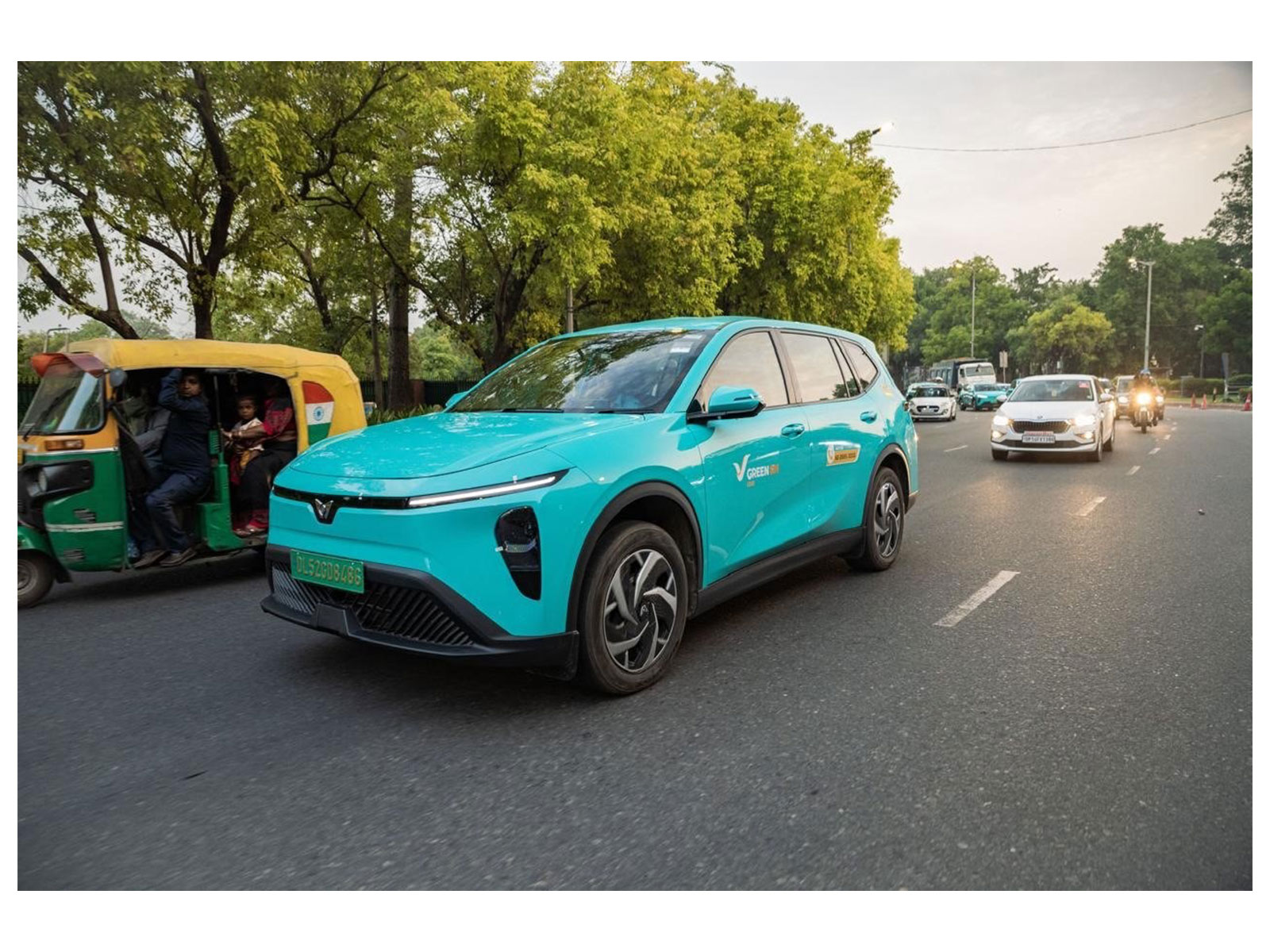
On June 5, 2026, Green SM officially launched Green SM Limo in Delhi-NCR, marking its entry into the Indian market [4]. On the surface, this may look like another international expansion move by a mobility brand. But the way Green SM frames the service suggests a broader ambition: not simply to add another electric ride-hailing option, but to build a consistent service experience in which the vehicle, the operating process, and the driver team all reflect the same quality standard.
In that model, drivers are not responsible only for taking passengers from point A to point B. They represent the brand at every touchpoint: from how they greet customers and assist with luggage to how they communicate during the ride and handle unexpected situations. When passengers step into a car, they do not really encounter a platform in the abstract; they encounter a specific person. For that reason, any ride-hailing brand that wants to compete on quality rather than price eventually has to return to the most fundamental question of all: how to build the driver as part of the product itself.
India’s new policy framework is also demanding a different professional standard
This shift is not driven only by the market; it is also reflected in the way regulators are looking at the sector. The Motor Vehicle Aggregator Guidelines 2025 require drivers to complete at least 40 hours of induction training before being onboarded to a platform. That training covers not only app usage and traffic regulations, but also safe driving, first aid, passenger conduct, gender sensitivity, and support for persons with disabilities. The guidelines also set requirements related to identity verification, driving licenses, medical checks, insurance, and revenue-sharing principles in certain operating models [5].
The significance of that framework is that it shows ride-hailing is no longer being viewed simply as a digitized matching model, but as a transport service sector with increasingly explicit entry standards. That also means the competitive edge in the next phase may belong not only to the platform that scales faster, but to the platform that can organize its driver workforce around a more professional, more sustainable, and more trustworthy standard.
Green SM’s story is not just about having training, but about what that training is for
According to Green SM India’s official recruitment information, partner drivers are expected to hold the appropriate license, go through interviews, driving tests, computer-based training, and OJT before formally starting work. The recruitment page also highlights earning potential of up to INR 45,000 per month, along with ESIC or equivalent private insurance and accident coverage where applicable [6]. Taken one by one, these may seem like familiar hiring details. But within the brand’s broader strategy, they point to something more important: Green SM appears to be positioning drivers as a workforce to be developed professionally, rather than simply as users joining a platform for short-term income opportunities.
The point is not merely that training exists, but that it is tied to a service standard. A driver may be tested on driving skills, but what the market increasingly cares about is whether that person is prepared for a customer-facing service role, supported to act as a brand representative, and placed within a career path clear enough to encourage longer-term commitment. That is where a genuine difference in mobility may begin to emerge.
A service standard only matters when the system supports it
Driver professionalism cannot rest entirely on individual effort if the tools of the job are not standardized. Green SM Limo has been introduced with features such as in-cabin and exterior cameras, emergency support buttons, rear air vents, and USB Type-C charging ports [4][7]. From a product perspective, these are configuration details. From a service perspective, they are part of the broader operating standard that can reduce variation between trips and allow drivers to focus more fully on the passenger experience.
That is also why Green SM’s story feels more significant than a typical service launch. The company is not only talking about electric taxis; it is trying to align technology, vehicles, and people within one service framework. The professional standing of drivers will not change through communications alone, but if more companies in the sector begin to treat drivers as a workforce to be selected, trained, equipped, and developed as a real service profession, ride-hailing could enter a different phase—one in which “5-star” is not only a promise to passengers, but also a benchmark applied to the profession of the person holding the wheel.
References
[1] NITI Aayog (2022), India’s Booming Gig and Platform Economy: Perspectives and Recommendations on the Future of Work: https://www.niti.gov.in/sites/default/files/2022-06/25th_June_Final_Report_27062022.pdf
[2] Rural India Online, Fairwork India Ratings 2024: Labour Standards in the Platform Economy: https://ruralindiaonline.org/en/library/resource/fairwork-india-ratings-2024-labour-standards-in-the-platform-economy/
[3] Entrackr, Ola, Uber and Porter score zero in Fairwork India Ratings 2024: https://entrackr.com/2024/10/ola-uber-and-porter-score-zero-in-fairwork-india-ratings-2024/
[4] Green SM, Green SM launches Green SM Limo, a fully electric taxi service in New Delhi, marking its official entry into the Indian market (5/6/2026): https://id.greensm.com/en/news/green-sm-launches-green-sm-limo-in-india
[5] Motor Vehicle Aggregator Guidelines 2025 (PDF archived on OpenCity): https://data.opencity.in/dataset/21201bda-6d31-4810-bd83-2eac226b1854/resource/2241 d340-af3d-4c37-8bd5-8ea18e88cad2/download/75e71eaa-a7e6-4962-b2e0-c58808605583.pdf
[6] Green SM India, Apply to become a Green SM Taxi Driver: https://www.greensm.com/in-en/driver-car
[7] Electrive, Green SM enters India’s ride-hailing market (10/6/2026): https://www.electrive.com/2026/06/10/green-sm-enters-indias-ride-hailing-market/
(ADVERTORIAL DISCLAIMER: The above press release has been provided by VMPL. ANI will not be responsible in any way for the content of the same)