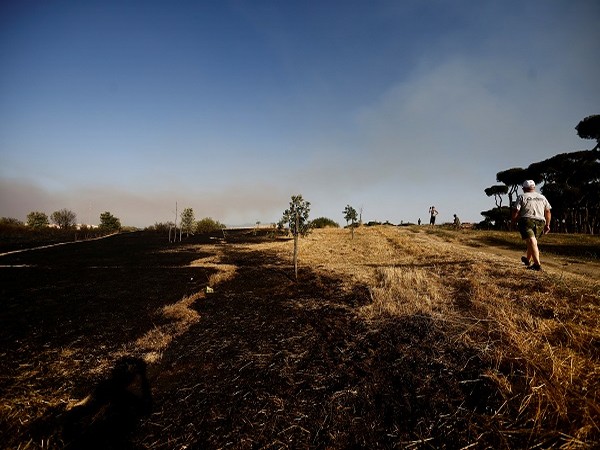
World's major cities hit by 25% more hot days than in 1990s
Oct 02, 2025
New York [US], October 2: The world's biggest capital cities are now sweltering under 25 percent more extremely hot days each year than in the 1990s, an analysis has found.
In 2024, the International Institute For Environment and Development (IIED) examined rising levels of extreme heat in the world's 20 most populous capital cities over the previous 30 years (1994-2023). The analysis revealed an inexorable increase in the number of very hot days, meaning 35C or above.
This updated analysis includes an expanded selection of 40 capitals and the latest temperature data from 2024, which was the hottest year on record according to the World Meteorological Organisation.
From Washington DC and Madrid to Tokyo and Beijing, the analysis showed a marked rise in hot days as the climate crisis intensifies. Overall, the assessment by the IIED, found the number of days above 35C in 43 of the world's most populous capital cities rose from an average of 1,062 a year from 1994-2003 to 1,335 from 2015-2024.
The rise was seen across the world, with the average number of days above 35C doubling in Rome and Beijing, and tripling in Manila. In Madrid, there are now an average of 47 days a year over 35C, compared with 25 before. In London, which has a relatively cool climate, the number of days above 30C doubled.
"Global temperatures are rising faster than governments probably expected and definitely faster than they seem to be reacting," said Anna Walnycki, an IIED researcher. "Failing to adapt will condemn millions of city dwellers to increasingly uncomfortable and even dangerous conditions because of the urban heat island effect."
"The impacts will be significantly worse in low-income or unplanned communities in the global south thanks to lower-quality housing," she said, noting that a third of the world's city dwellers live in slums or informal settlements.
Global heating caused by fossil fuel burning is making every heatwave more intense and more likely. The fossil fuel emissions causing the climate crisis are still rising, despite needing to fall by 45 percent by 2030 to have a chance of keeping global temperature below the Paris agreement target of 1.5C above preindustrial levels.
Source: Emirates News Agency