Nature Conference India 2026 at MAHE Manipal puts infectious disease threats under the scientific spotlight
Oct 16, 2026
VMPL
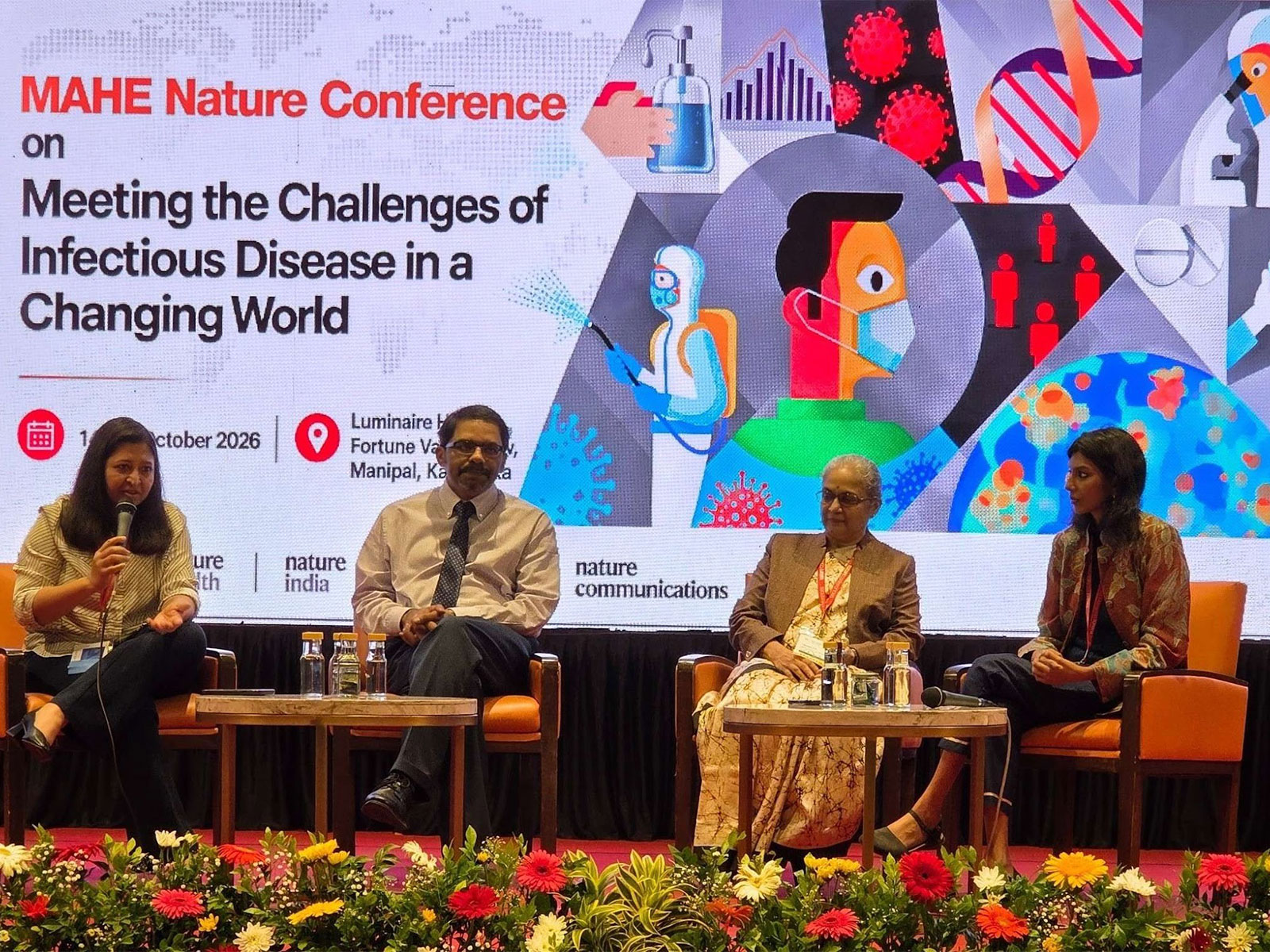
Manipal [India], October 16: As drug-resistant infections spread, climate change reshapes disease patterns and lessons from COVID-19 remain fresh, some of the world’s leading infectious disease experts spent three days at the Manipal Academy of Higher Education (MAHE), Manipal, searching for answers. The second Nature Conference in India, ‘Meeting the challenge of infectious diseases in a changing world’, concluded today.
Held from 14 to 16 October and organised by Nature Medicine, Nature Microbiology, Nature Health, Nature Communications and MAHE, the conference brought together researchers and public health experts from India and around the world. Sessions covered disease surveillance and forecasting, antimicrobial resistance (AMR), diagnostics, disease prevention, vaccine development, climate change and pandemic preparedness, with a focus on challenges that matter to India’s health system.
The conference follows the first Nature Conference in India, also held at MAHE Manipal in 2024 on nanomaterials in biomedical applications.
Dr Sharath K. Rao, Vice Chancellor, MAHE said: “Hosting the second Nature Conference in India at MAHE is an important opportunity to bring together researchers and experts working across disciplines and geographies. Infectious diseases present complex challenges that require scientific collaboration, sustained research and the exchange of knowledge. We are pleased to partner with Nature Portfolio in creating a platform for meaningful scientific engagement and in supporting conversations that can contribute to the advancement of research and public health.”
Lorenzo Righetto, Senior Editor, Nature Health, said: “Addressing infectious diseases requires a deeper understanding of emerging pathogens, antimicrobial resistance, disease prevention and the wider environmental factors that influence health. The Nature Conference brings together researchers working across these areas, creating opportunities for scientific exchange and interdisciplinary collaboration. We are delighted to continue our partnership with MAHE and support a forum that enables the research community to engage with some of the most pressing challenges in global health.”
The programme featured keynote addresses, research presentations and poster sessions, bringing together perspectives from epidemiology, microbiology, public health, clinical research and environmental science. Discussions examined the importance of strengthening surveillance systems, improving disease detection, advancing treatment and prevention strategies, and understanding the connections between environmental change and infectious disease risk.
Big ideas from the keynotes:
* Learning from COVID-19: Lauren Gardner of Johns Hopkins University spoke on public health in the post-COVID era and the role of data in decision-making.
* Rethinking TB diagnosis: Madhukar Pai of McGill University addressed how tuberculosis diagnosis can be transformed, a priority for India, which carries a large share of the global TB burden.
* Protecting children: Shabir A. Madhi of the University of the Witwatersrand examined progress and challenges in preventing vaccine-preventable respiratory infections in children.
* Predicting the next outbreak: Marion Koopmans of Erasmus University Rotterdam discussed outbreak risk prediction as a pillar of preparedness.
Other sessions explored antimicrobial resistance and the development of new treatments, including research on Klebsiella pneumoniae and tuberculosis regimens. Discussions on diagnostics and prevention included HPV testing and vaccination, the development of vaccines for emerging and endemic infectious diseases, and approaches to improving access to long-acting preventive interventions.
The conference also examined the relationship between climate change and infectious diseases, including changing vector-borne disease risks, childhood malnutrition and antimicrobial resistance through a One Health perspective. These discussions highlighted the relevance of interdisciplinary research in understanding the interconnected factors shaping global health challenges.
Research presentations and poster sessions let early-career and established researchers present their work and build connections across institutions and disciplines. The programme concluded with poster awards and closing remarks.
By bringing together epidemiologists, microbiologists, clinicians, public health specialists and environmental scientists, the conference underlined that tackling emerging health threats will depend on collaboration across disciplines and geographies.
About Nature
Nature is a leading international scientific journal, publishing high-quality, peer-reviewed research across a wide range of disciplines. Part of Springer Nature, it is widely recognised for its role in advancing scientific discovery and providing a platform for significant breakthroughs that shape global understanding of science and health. Springer Nature is one of the leading publishers of research in the world, publishing the largest number of journals and books and are a pioneer in open research.
Through our leading brands, trusted for more than 180 years, we provide technology-enabled products, platforms and services that help researchers to uncover new ideas and share their discoveries, health professionals to stay at the forefront of medical science, and educators to advance learning. We are proud to be part of progress, working together with the communities we serve to share knowledge and bring greater understanding to the world. For more information, please visit nature.com and follow Nature Portfolio.
About Manipal Academy of Higher Education (MAHE)
Manipal Academy of Higher Education (MAHE) is an Institution of Eminence Deemed to be University. MAHE offers over 400 specialisations across the Health Sciences (HS), Management, Law, Humanities & Social Sciences (MLHS), and Technology & Science (T&S) streams through its constituent units at campuses in Manipal, Mangalore, Bengaluru, Jamshedpur, and Dubai. With a remarkable track record in academics, state-of-the-art infrastructure, and significant contributions to research, MAHE has earned recognition and acclaim both nationally and internationally. In 2020, the Ministry of Education, Government of India, awarded MAHE the prestigious Institution of Eminence status. Currently ranked 3rd in the National Institutional Ranking Framework (NIRF) 2025 rankings, MAHE is the preferred choice for students seeking a transformative learning experience and enriching campus life, as well as for national and multinational corporations seeking top talent.
(ADVERTORIAL DISCLAIMER: The above press release has been provided by VMPL. ANI will not be responsible in any way for the content of the same.)